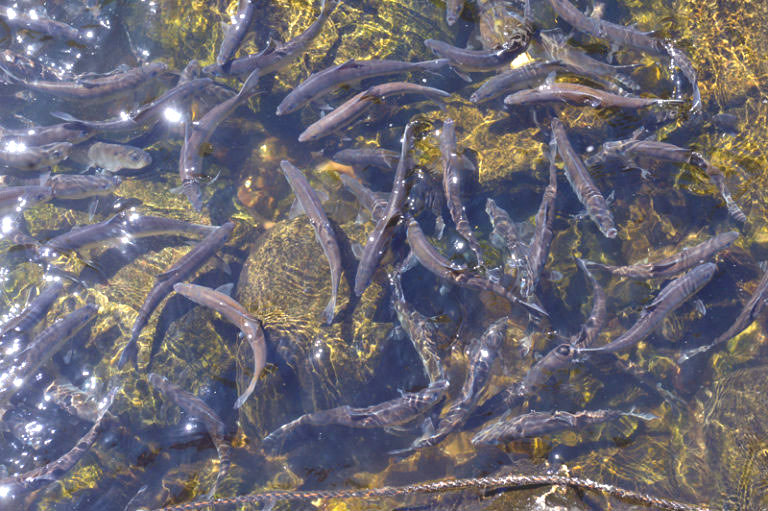
Alewives swim in Damariscotta Mills on June 2. The Damariscotta Mills Fish Ladder and the Bristol Mills Fish Ladder both posted lower than average yields, according to town officials. (Paula Roberts photo, LCN file)
This year’s April showers brought May flowers and a poor alewife yield in Lincoln County.
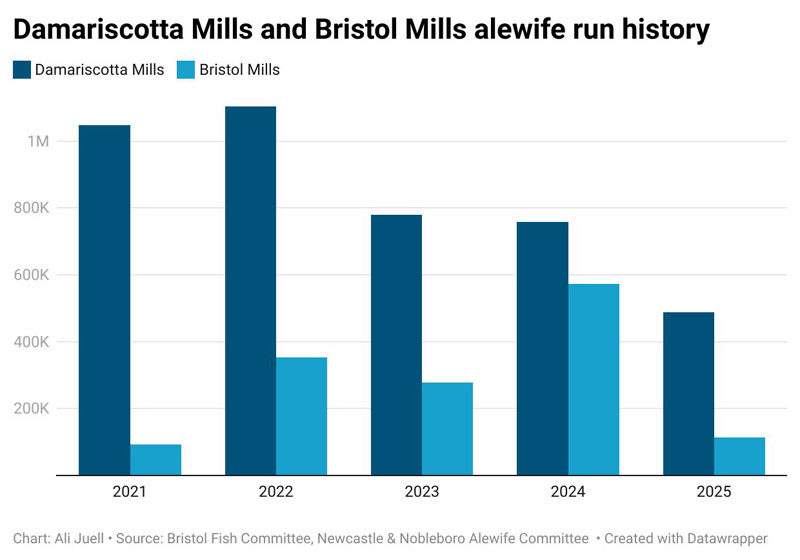
Due to cold weather and high water volume, town officials said this year’s alewife run was significantly lower than usual at Damariscotta Mills and Bristol.
Starting in the late 1700s, overfishing and the use of dams caused alewife populations to decrease across Maine for more than two centuries, according to the Maine Forest and Logging Museum and the Conservation Law Foundation. In recent years, however, the small river herring have made a comeback as fish ladders across the state have been restored, including at Bristol Mills and Damariscotta Mills.
The amount of fish harvested fluctuates significantly depending on weather conditions, Newcastle Select Board member Karen Paz said, but this year’s revenue was not enough to cover the Damariscotta Mills Fish Ladder’s labor and maintenance.
“We don’t ever have to dip into (the reserves) to pay expenses, but this year we’re short,” Paz said during the Newcastle Select Board’s June 23 meeting, at which members approved the use of up to $1,000 in reserve funds to cover the remaining costs.
The ladder – run by a shared committee of the towns of Nobleboro and Newcastle – produced $14,550 in revenue this year, substantially lower than its $53,446 average, according to yearly revenue data since 2018 from the towns’ joint Alewife Fish Committee. Revenue comes from selling the river herring to lobster fisheries.
Bristol Fish Committee Chair Jay Crooker said the Bristol Mills Fish Ladder also had a tough year. There was no revenue loss, as fish aren’t harvested at Bristol Mills, but volunteers counted 113,500 of the river herring this year, down 80% from last year’s record run of 573,000 alewives
The fall in Lincoln County was not part of a widespread trend, said Bailey Bowden, executive director of the advocacy and research group Alewife Harvesters of Maine. While harvests vary by region, Bowden said it was an average to above-average year for most alewife fisheries across the state.
“We can’t talk to the fish,” Crooker said, but he attributed this year’s decrease to the cold weather and high water volume in Lincoln County’s waterways.
If the water conditions aren’t right, the fish will simply not travel into river systems and won’t lay eggs, said Mark Becker, fish agent for Nobleboro and Newcastle.
“When we had all of that rain and all of the high water … the fish just backed out,” Becker said. “They will literally just disappear overnight.”
Once the river herrings make it out to sea, Bowden said the environmental factors that help or hurt alewife populations are beyond control.
“It’s all over the place,” Becker said. “There’s no rhyme or reason to it.”
The low yield is a “bummer” compared to previous years, but Crooker said one low run shouldn’t be any cause for concern.
“Nature is going to do what it’s going to do,” he said.
On the bright side, Crooker said there were more mature alewives in the stream this year. He added it’s a good sign for Bristol as the town prepares to eventually apply for an alewife harvesting license, which would allow for the fish to be harvested and sold for revenue.
Bowden also said lobster fisheries shouldn’t have any issue getting more of the river herring from other alewife harvesters.
At a time when higher ocean temperatures are reducing the size of many fish species and causing shifts in biodiversity, according to a 2024 report by the Maine Department of Environmental Protection, growing alewife harvests and restored fish ladders across the state are reasons to celebrate, Bowden side.
“You don’t hear of any other fisheries getting opened up,” Bowden said. “But with river herring, we’re increasing the numbers and increasing harvest opportunities … It’s a rare success story.”